
See If Your Baby is on Track: Get Tested With a Free Developmental Screening
As a parent, it’s easy to wonder if your child is developing “normally.”
Maybe your friend’s child is already talking in full sentences. Maybe another child can pedal a tricycle while yours is still figuring out the pedals. Maybe your child seems ahead in some areas but behind in others.
And then comes the inevitable question:
Is my child on track?
The short answer is: every child develops at their own pace. But knowing what to look for can help you understand your child’s development and recognize when it might be helpful to ask for additional support.
At Children’s Developmental Services of Campbell County, we believe in the value of every child - and in giving children the support they need to reach their fullest potential.
What Does “On Track” Really Mean?
Child development isn't a race.
Children grow and learn in different ways and at different speeds. One child may be an early talker but need more time with physical skills. Another may be very independent physically but still developing social or communication skills.
That's why looking at your child as a whole is so important.
Development generally includes several areas:
Communication: Understanding and using words, gestures, and other ways of communicating
Social-emotional development: Building relationships, expressing emotions, and learning to manage feelings
Cognitive development: Thinking, learning, remembering, exploring, and solving problems
Physical development: Developing coordination, balance, strength, and fine-motor skills
Your child doesn't need to be “ahead” in every category. What matters is continuing to grow, learn, and develop new skills.
What Skills Should a 3-Year-Old Be Developing?
By around age three, many children are becoming more independent and increasingly interested in the world around them.
You may notice your child:
Talking and Communicating
Your child may be using more words and beginning to have conversations with you. They may ask lots of questions, tell you about something that happened, or use language to express what they want and need.
Communication isn't just about how many words your child knows. Pay attention to how they understand others, express themselves, and interact with people.
Playing and Interacting
Three-year-olds are learning how to be part of a group.
They may begin playing alongside or with other children, taking turns, following simple rules, and learning how to handle disagreements.
They are still learning, of course. Sharing and taking turns don't always come naturally!
Moving and Developing Physical Skills
Running, jumping, climbing, throwing, catching, and navigating stairs are all opportunities for children to build coordination and confidence.
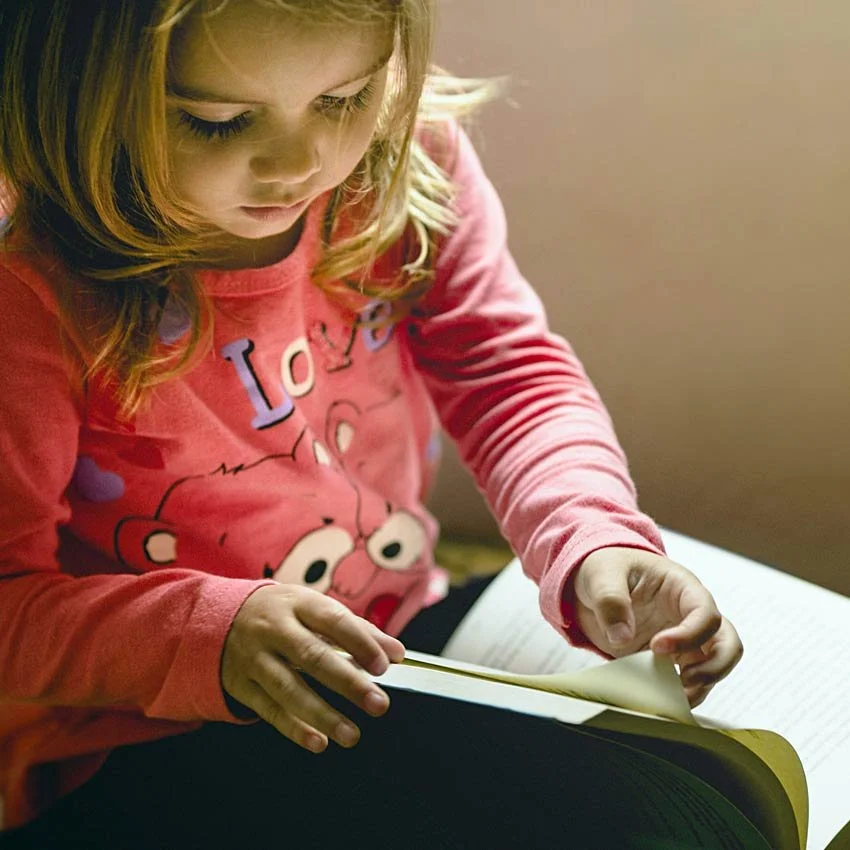
Fine-motor skills are developing too. Your child may be drawing, building with blocks, using utensils, turning pages, or working on getting dressed independently.
Becoming More Independent
You may hear:
“I do it!”
A lot.
That growing independence is an important part of development. Children are learning to make choices, complete simple tasks, follow routines, and take care of themselves with increasing confidence.
Learning Through Play
For young children, play isn't just a way to pass the time.
Play is learning.
Through purposeful play, children practice communication, problem-solving, social skills, self-regulation, memory, language, and more.
That's one reason early childhood education is about much more than preparing children for the next grade. It's about helping children build the skills they need to grow, learn, and participate successfully in the world around them.
What If My Child Isn't Doing These Things Yet?
This is where parents sometimes get caught in the comparison trap.
You see another three-year-old doing something your child isn't doing, and suddenly you start wondering whether something is wrong.
Take a breath.
A difference doesn't automatically mean a delay.
Children develop unevenly, and a child may make rapid progress in one area while taking more time in another. But if you consistently have concerns - or if your child seems to be struggling with several developmental skills - it is worth talking with someone who can help you understand what you're seeing.
You don't have to diagnose your child yourself.
That's what developmental screening and evaluation are for.
Developmental Screening: A Simple Way to Learn More
If you've ever wondered, “Is my child where they should be?” a developmental screening can be a helpful place to start.
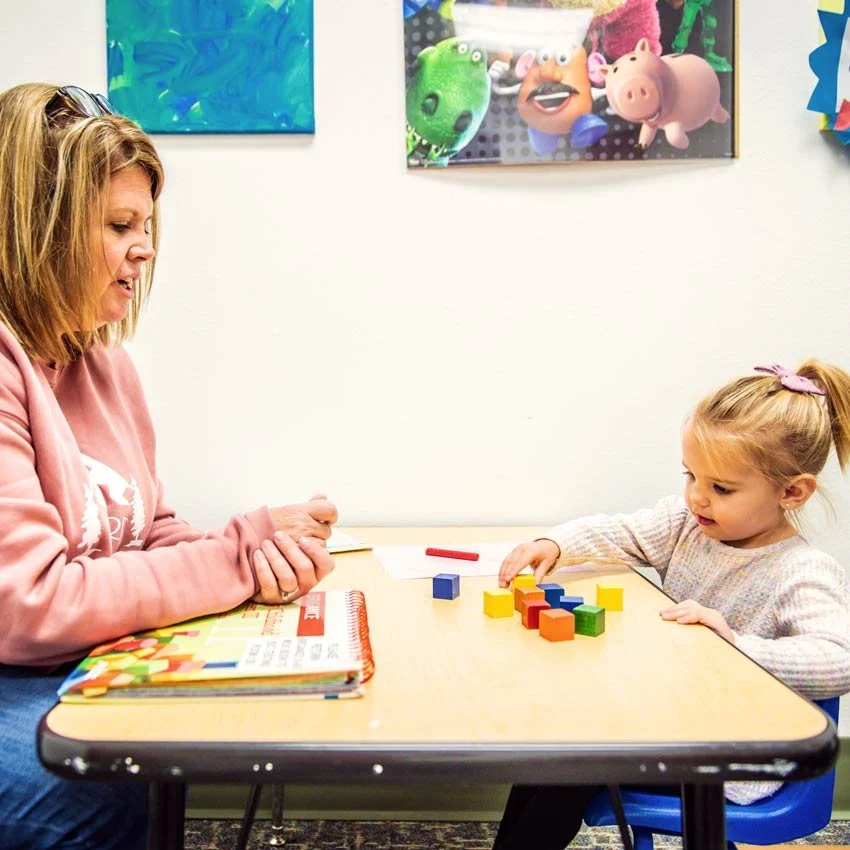
A screening looks at important areas of a child's development, including communication and language, social-emotional development, cognitive skills, motor and physical development, vision, and hearing.
And here's something many Wyoming parents don't know:
Developmental screenings are available at no cost to Wyoming families.
One Before Two is a Wyoming initiative that helps families connect with developmental screening resources across the state. The program encourages families to have their child's development screened once before age two and again before age five.
A developmental screening isn't a diagnosis.
It's simply a way to take a closer look at how your child is developing and determine whether additional evaluation or support may be helpful.
And you don't have to wait until you're certain there is a problem to ask questions.
When Should Parents Ask for Help?
Consider talking with your child's pediatrician, teacher, or an early childhood professional if you notice things such as:
Your child is having significant difficulty communicating.
Your child rarely interacts with other people.
Your child is struggling to understand simple directions.
Your child is having difficulty with age-appropriate movement or coordination.
Your child has difficulty participating in play with other children.
Your child seems to be losing skills they previously had.
You have a persistent feeling that something isn't quite right.
You don't need to wait until you're certain.
If you're concerned, it's okay to ask.
Early identification can give children and families more opportunities to access support when they need it.
Children's Developmental Services provides developmental screening and evaluation services for young children and works with families to identify areas where additional support may be helpful.
If a child qualifies for services, support may include speech and language, occupational, or physical therapy, depending on the child's individual needs. Services can take place in a variety of settings, including the home, community preschool or childcare setting, or classroom.
Don't Compare Your Child - Get to Know Your Child
One of the best things you can do is pay attention.
What does your child enjoy?
What are they learning?
What comes easily?
Where are they struggling?
What new skill did they master this week?
Those observations can tell you much more than comparing your child to the child next door. And if you have concerns, asking questions isn't an overreaction. It's parenting.
At Children's Developmental Services of Campbell County, our goal is to provide comprehensive early childhood services that help children and families thrive. We believe every child has value. We believe every child has potential. And we believe families shouldn't have to navigate developmental concerns alone.
If you're wondering whether your child is on track, start by learning more about developmental milestones. If you still have questions, talk with someone who can help. For Wyoming families, One Before Two is a great place to start learning about developmental screenings.
And to learn more about early childhood education, developmental services, and programs available through Children's Developmental Services of Campbell County, visit our website.
Every child develops differently. And every child deserves the opportunity to thrive.